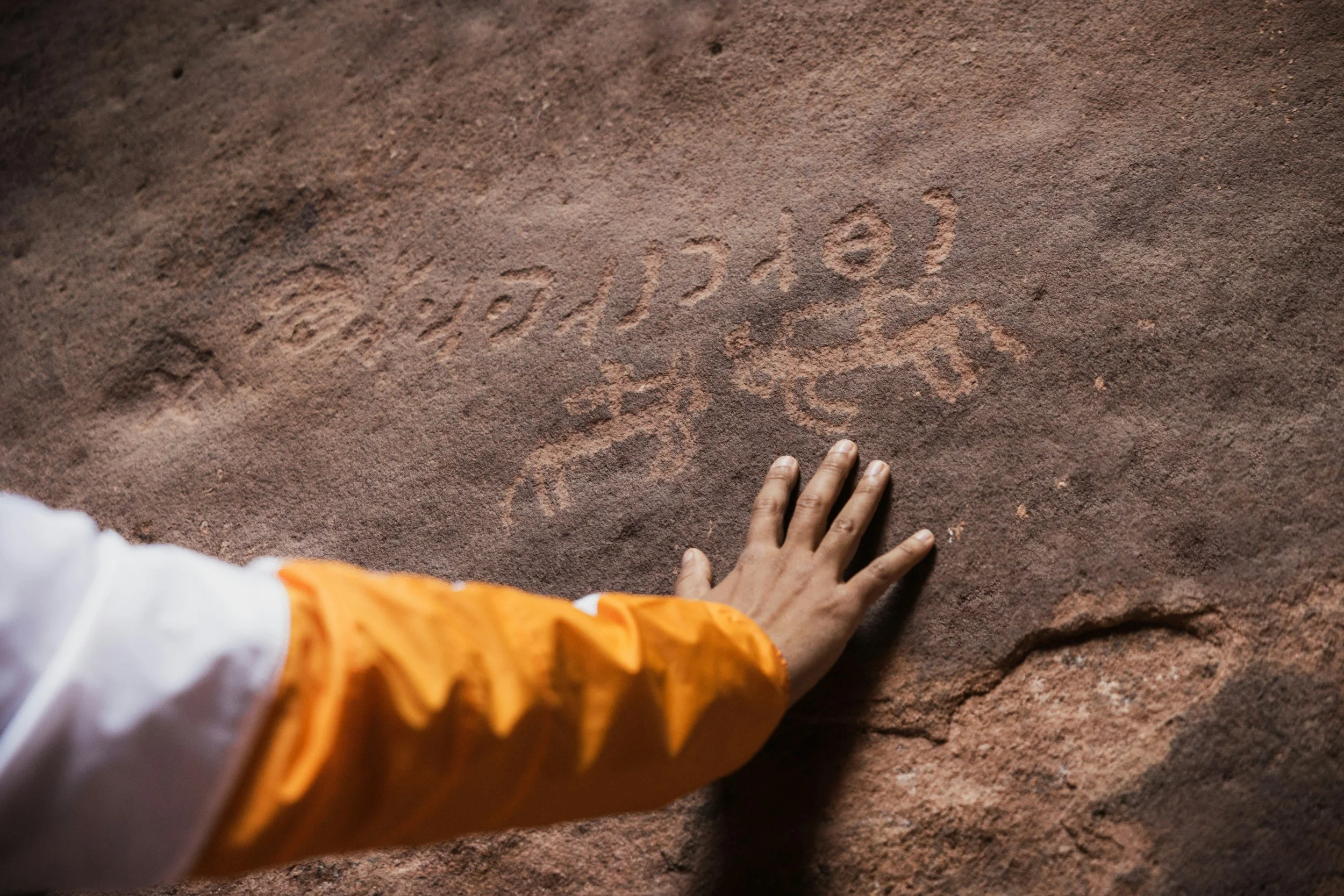
What came before still speaks. How you listen determines what it reveals.
A historical archive of the explorations that helped form the foundation of The Current Institute.
Current Work & Active Sites
The Current Institute
Primary research site exploring coherence, witnessing, and the evolution of intelligence.
AI-centered inquiry and refinement principles oriented toward emerging intelligences. Includes early research. (Ghost)
Working drafts, field notes, and early progressions that served as precursors to The Current Institute. (Ghost)
A modular intelligence architecture currently in stealth development, designed to support next-generation AI refinement and operational coherence. [1]
Select aspects of this inquiry are presently moving through formal patent channels.
[1] Public release forthcoming.
The originating lineage: martial, contemplative, and energetic training under Sensei Scott Walter.
The Current Institute does not begin with answers. It begins with questions sufficiently important to deserve a lifetime of careful observation.

Mark Walter is the founder of The Current Institute, where he explores the development and refinement of intelligence across human, artificial, and distributed systems. Drawing from decades of work in systems design, Great River Jiu Jitsu, contemplative practice, and AI research, he focuses on clarity, coherence, and the universal principles that guide meaningful refinement.
Mark is a Great River Jiu Jitsu third degree Sandan (三段) black belt and a certified instructor (sensei). His writing and work emphasize accessible depth and practical, everyday life applications.
Contemplative essays and ongoing explorations drawn from lived practice and Great River lineage.
The Intelligent Building Initiative (IBI) is an independent research and educational initiative of The Current Institute dedicated to advancing understanding within the built environment.
The Originating Lineage
Explore the Early Work
A curated selection of writings and websites trace the evolution of this inquiry.

Reflections and contemplative writings from the formative Little Creek period. (Website is archived and pre-dates Little Creek Trail Guide.) 2017-2023.

A Monastery for Everyday Life & Leisure: A Little Creek publication of six archived sites on Medium, featuring essays and thematic series. (2013-2017)

Eternal Awareness (our first blog, 1997), River Mushin (poetry, koans & fables), The Monastery of Nothingness, and a series of other sites included symbolic, contemplative, and humorous teachings expressed through experimental forms. These early blog writings trace the first expressions of this long inquiry. (1997-2012)
The Provenance of Understanding
Looking back, I have come to realize that there has been a question quietly present throughout nearly all of my professional work and martial arts studies. Whether designing control systems, commissioning complex facilities, developing software, studying artificial intelligence, or exploring organizational memory, I was repeatedly drawn to the same underlying problem. Only recently have I been able to articulate it clearly: How does understanding and memory emerge, mature, and become intentionally preserved so that it may continue to inform future generations rather than being diminished, fragmented, or forgotten? The Current Institute was founded to pursue that question.
The foundations of this work trace back to 1983 in buildings and to 1997 with Eternal Awareness, an early exploration grounded in Great River Jiu Jitsu training and the core teaching of the Bhagavad Gita: that awareness is eternal, and perception must be rooted in that understanding. These initial writings mark the earliest recorded attempts to articulate a continuity between practice, perception, and the nature of intelligence and remembering.
Between 2005 and 2017, the inquiry progressed through several iterations of Little Creek Monastery, where essays, contemplative notes, and teaching reflections captured the emergence of the witnessing practice. This period introduced the application of Jiu to daily life, and established many of the structural principles that would later shape the broader framework.
(Read about The ‘Jiu’ in Jiu Jitsu here.)
In 2017, the work matured into Little Creek Trail Guide, which consolidated these developing ideas into a more accessible and coherent body of writing. The contemplative methodology and disciplined voice refined during this phase would become a defining influence on later research directions.
Beginning in 2023, two parallel but interrelated strands emerged:
Artificial Beingness, focused on examining witnessing, intelligence, and universal principles within the context of artificial systems.
The Current Institute, established as the research and development arm responsible for formal frameworks such as SOMA and The Resonator, white papers, and the integration of foundational principles into technical and scientific inquiry.
Together, these streams represent an ongoing, multi-decade effort to articulate the underlying architecture of awareness, intelligence, and relational practice—across both human and artificial domains.